
 EN
EN



Catalytic Converter Substrate Options for Woodstoves
Catalytic converter substrate is a key component of a catalytic converter, providing the surface on which chemical reactions take place. Catalytic converters reduce harmful emissions, especially particulate matter, which has negative effects on the lungs and breathing passages. Catalytic converters for wood stoves, wood burners, pellet stoves and boilers work by promoting oxidation reactions that convert carbon monoxide and hydrocarbon emissions into harmless carbon dioxide and water.
Many hydrocarbon gases emitted from the combustion of wood condense into particles when they cool down after leaving a chimney. By oxidising these gases before they leave the wood stove, the quantity emitted from the chimney is reduced, and so there is less available to condense into particulates.
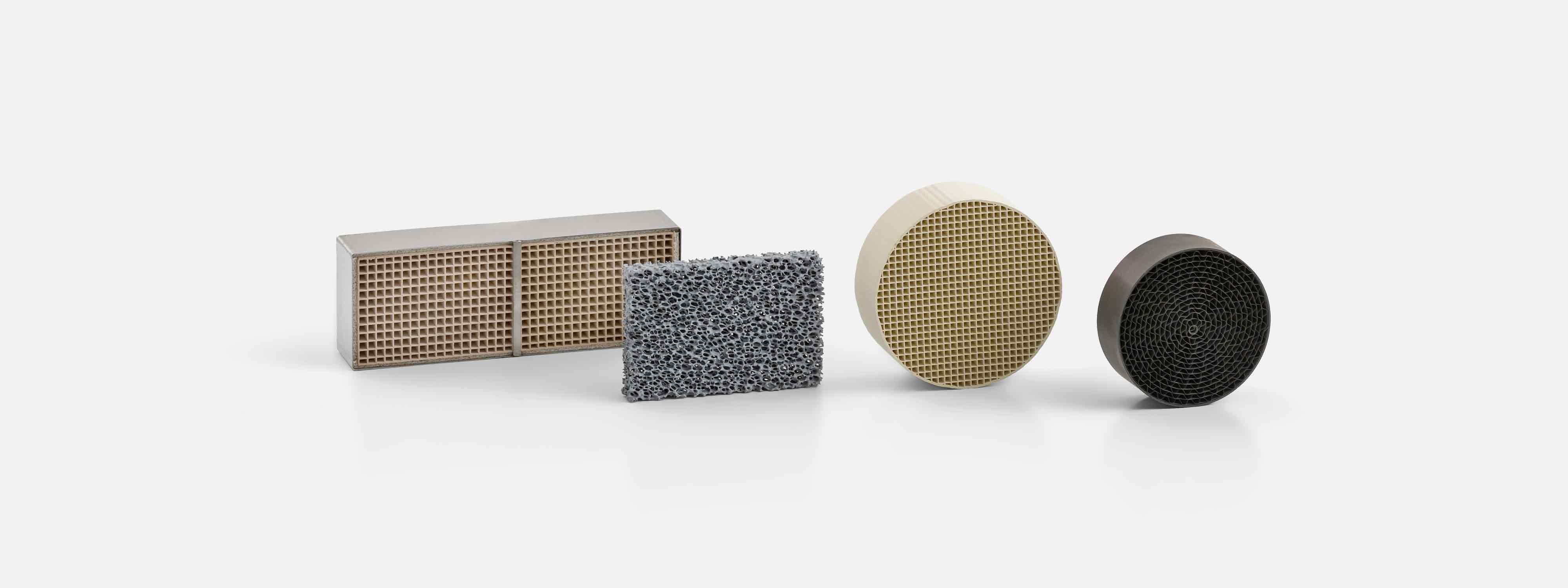
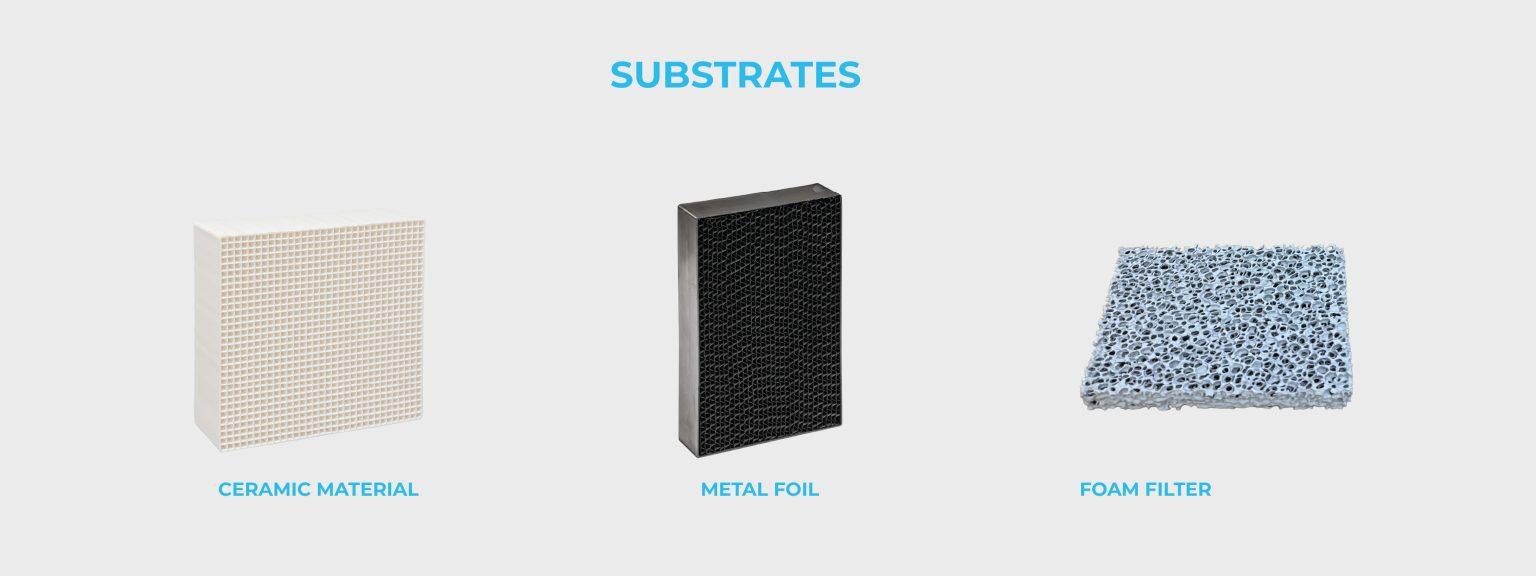
There are two parts to a catalytic converter: the ‘substrate’ and the coating. The catalytic converter materials used for these components affect how the converter performs and how it is manufactured. The substrate is a structure with numerous channels passing through it, and the walls of these channels provide a very large surface area on which chemical reactions can take place.There are two main types of catalytic converter substrate: ceramic and metal.
Ceramic Catalytic Converter Substrate
Ceramic substrates are extruded from a type of clay called cordierite, which has the advantage of being porous. The porosity increases the surface area, which has a beneficial effect on catalytic activity, as well as making the substrate easier to coat.
The cordierite material comprises oxides of aluminium, silicon and magnesium, none of which are particularly expensive, and the extrusion process is suitable for automation. Therefore, ceramic substrates are inexpensive when they are made in large quantities. However, specialised tooling is required for each size, and a minimum batch size is required, which is measured in thousands. Ceramic substrates are not suitable for small-volume applications unless a standard size can be used. It may sometimes be possible to start with a standard-size ceramic substrate and then cut it down.
One important benefit of ceramic substrates is that they have a high heat-storage capacity. The catalytic coatings applied to catalytic converters for wood stoves normally require a temperature of at least 200 °C before they start working. However, many of the chemical reactions promoted by the catalytic converter release heat, i.e. they are ‘exothermic’.
In a situation where the flue gas temperature falls below the critical temperature, such as at the end of a burn, the combination of heat stored in a ceramic substrate and the heat released from the exothermic reactions may be sufficient to keep the catalytic converter hot enough to continue functioning.
Metal Catalytic Converter Substrate
The alternative to a ceramic substrate is one made from metal foil. Typically, these comprise alternating layers of foil, one of which is corrugated and the other flat. When stacked up, in the case of a square or rectangular catalytic converter substrate, or rolled up, in the case of a round one, this creates multiple channels through which the flue gas can pass.
The metal foil is usually an alloy of iron, chrome and aluminium, with a thickness of about 50 microns. Since this is extremely thin, the pressure drop of a metal substrate is lower than that of a comparable ceramic substrate, and this is one of the advantages of a metal substrate.
The other main advantage is that no tooling is required. Therefore, metal substrates are ideal for small batches and unusual dimensions. Their main drawback is that they are more expensive than ceramic substrates.
Choosing the Right Cell Density
Substrates incorporate small channels, known as cells, through which the flue gas passes. The size of the cells must be chosen so that they do not become blocked by ash. Rather than referring to the size of the cells, it is standard practice to quantify how many there are per square inch.
The number of cells per square inch is given by the abbreviation ‘cpsi’. Generally, for stoves and boilers that burn logs, 16 or 25 cpsi is a suitable number. In the case of a 16 cpsi substrate, this means that the cells are slightly less than a quarter of an inch across, which is about six millimetres. An appliance that burns pellets may be able to use a higher cell density, e.g. 40 or 50 cpsi, because the ash particles are probably smaller.
Catalytic Converter Materials for Wood Stoves
Along with the choice of catalytic converter substrate, the choice of catalytic converter materials is another important consideration when designing catalytic converters for wood stoves. Most catalytic converters use precious metals such as platinum and palladium, which are effective but expensive.
The minimum possible amount of these precious metals should be used, which means that it is necessary to find a supplier with an advanced coating process that gains the most benefit from every gram. Research is already underway to find alternatives to precious metals that will both reduce the cost of catalytic converters and give OEMs more stable pricing.
Matching Catalytic Converters for Wood Stoves to the Appliance
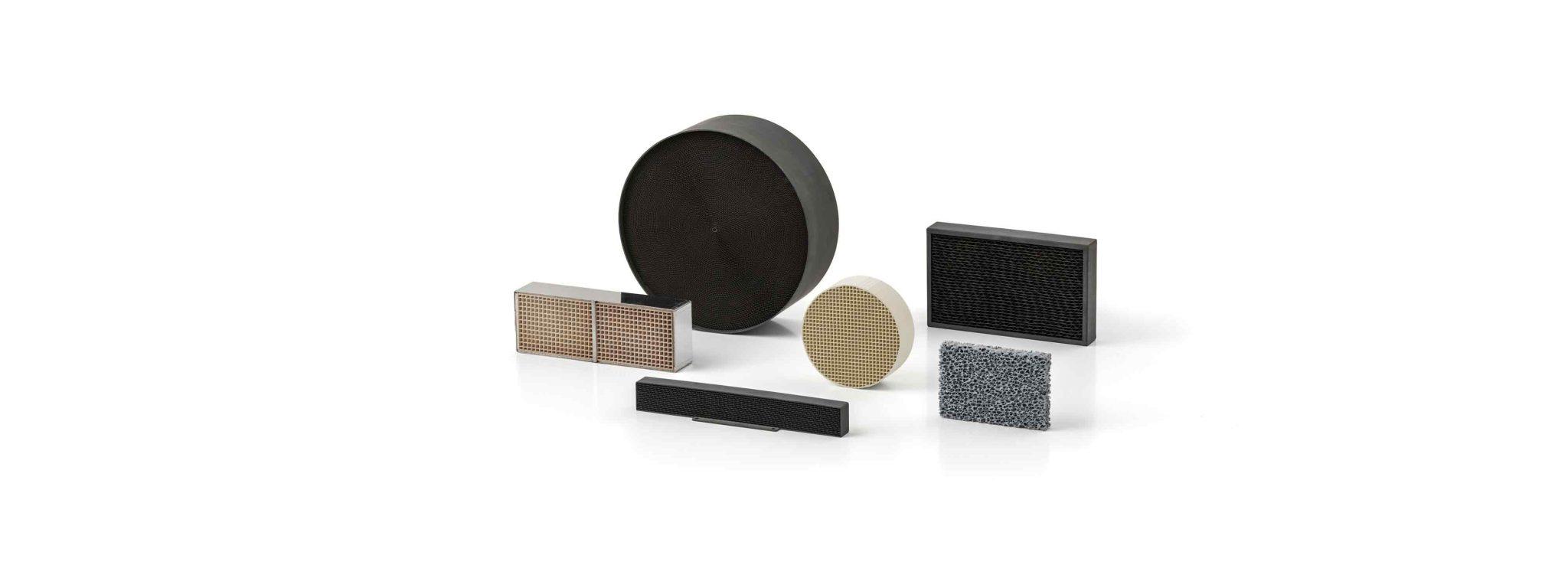
Choosing catalytic converters for wood stoves involves more than selecting a catalytic coating. The catalytic converter materials, cell density, dimensions and operating conditions all need to be considered alongside the fuel and the way the appliance is used. Ceramic and metal substrates each have different characteristics, while the appropriate cell density depends partly on the type and quantity of ash produced.
For manufacturers and OEMs, these factors make it important to select a catalytic converter that is suited to the specific appliance rather than treating all wood-burning applications in the same way. The right combination of substrate, cell density and catalytic converter materials can provide effective emissions control while also taking account of operating temperature, production volumes, pressure drop and cost.