
 EN
EN



Metal Substrate Catalytic Converters: How to Reduce Sourcing Costs
Metal substrate catalytic converters are used in many different sectors, including commercial rapid cook ovens and wood stoves, as well as in the exhaust systems of internal combustion engines. These engines are used in diverse applications, ranging from cars and motorcycles to very large engines fitted to generators and even ships.
Metal substrates were originally developed for demanding automotive applications, where a catalytic converter needs to withstand vibration, pulsating gases, physical shocks and significant changes in temperature. However, applications such as ovens and wood stoves generally operate under much less demanding conditions, meaning that automotive-grade materials and manufacturing methods can sometimes be more than is necessary. By selecting materials suited to the actual operating conditions and using an effective coating process, it is possible to produce durable metal substrate catalytic converters while reducing material and manufacturing costs.

How Metal Substrate Catalytic Converters Developed
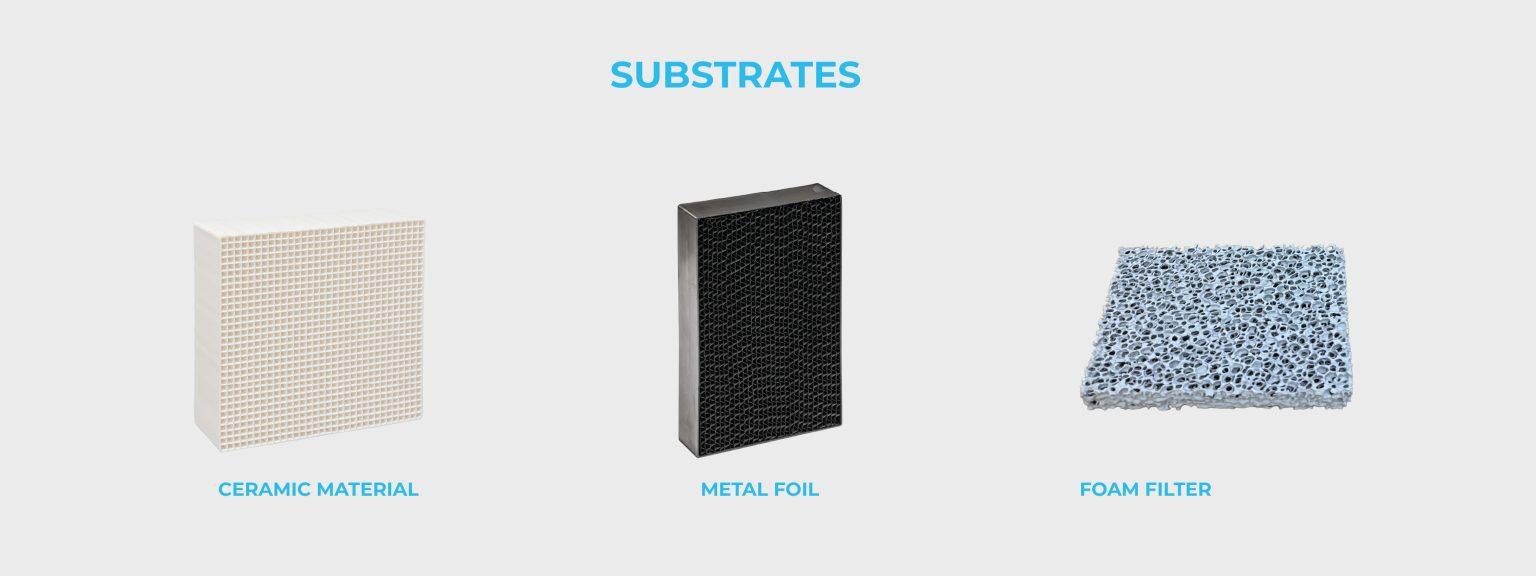
Metal substrate catalytic converters were first developed for the automotive market as an alternative to the ceramic substrates that are most commonly used. Although more expensive than the ceramic alternative, they offered several advantages. The first was a lower pressure drop due to their very thin walls. In addition, they were better able to withstand vibration, pulsating gases, physical shocks and sudden changes in temperature.
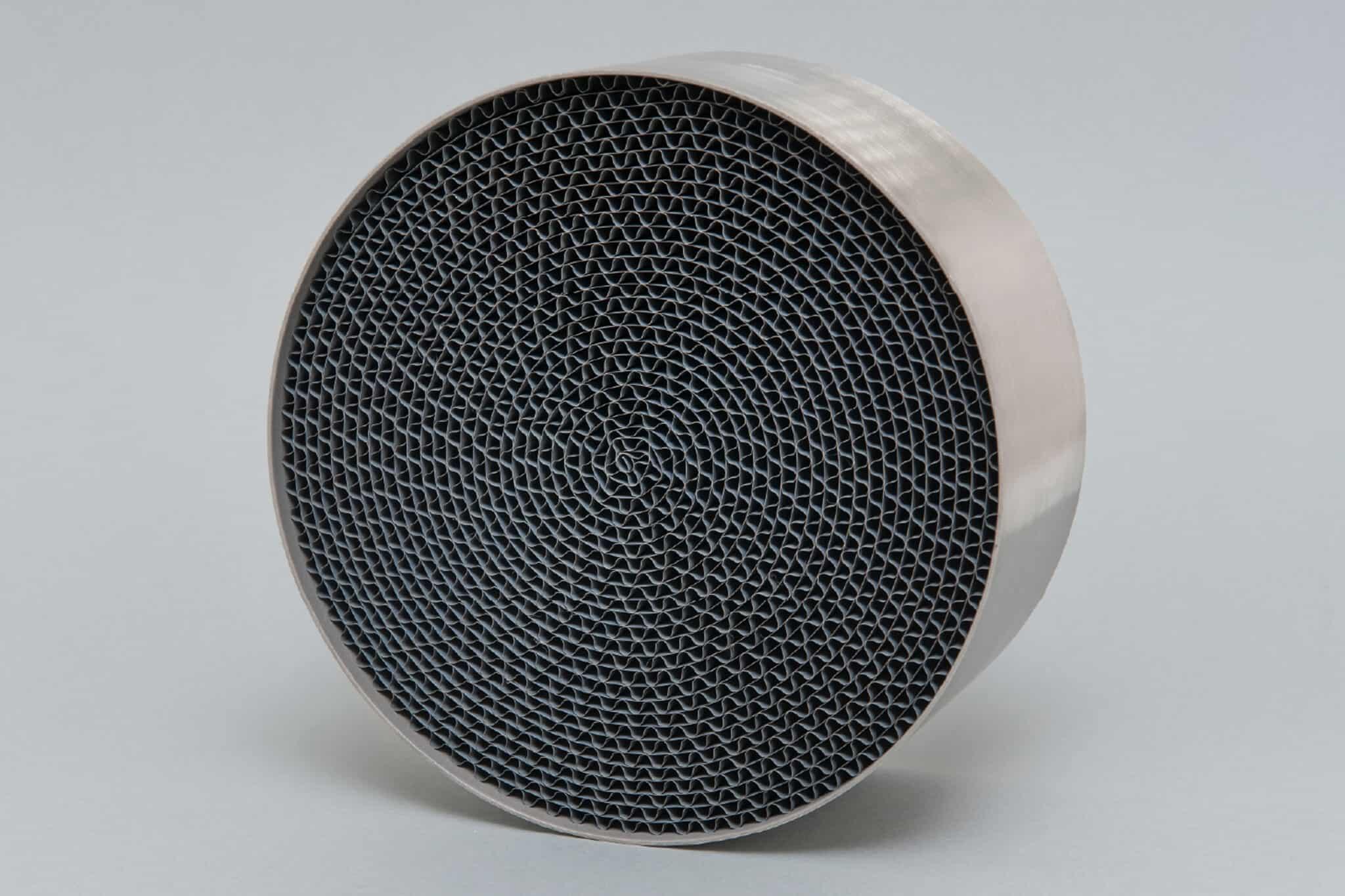
By the 1990s, metal substrates used in the automotive sector had developed into mature products, capable of withstanding the demanding conditions found in car exhaust systems. The metal foil was made from an alloy containing iron, chrome and aluminium, sometimes referred to as Fecralloy or aluchrome, and was produced mainly by large industrial companies in Europe. This foil was corrugated, rolled into substrates and then brazed at a very high temperature under vacuum so that oxygen did not interfere with the brazing process. This type of product is still the ‘gold standard’ for metal substrates used for exhaust purification in heavy-duty and high-performance engines.
Why Automotive Catalytic Converters Need More Durable Materials
It was at about the same point in time that metal substrates began to be used in other applications, such as wood stoves and ovens, and it was logical to apply the same technology as a starting point. However, these applications are much less demanding than a car exhaust. They create little or no vibration, while the gas flow is smooth and temperatures are modest, especially in the oven sector. Using the same materials and manufacturing approach as the automotive sector therefore risks overengineering and, consequently, wasting money.
So how can economies be made on metal substrate catalytic converters used in wood stoves and ovens without impacting their durability? There are two aspects to the answer: materials and construction method.
Choosing Substrate Materials for Wood Stoves and Ovens
The top-quality material used for making metal substrates is an alloy containing iron, chrome and aluminium. The most common grades are DIN 1.4725, which contains 4% aluminium, and DIN 1.4767, which contains 6% aluminium. When heated, this aluminium melts and then migrates to the surface, where it forms a layer of aluminium oxide. This serves two functions: it acts as a barrier that prevents corrosion of the iron underneath, and it also provides a rough surface that makes it easier for a catalytic coating to adhere.
It is important to note that just because a material complies with a DIN standard, this does not mean that all material used for making metal substrates is the same. Metal foil produced in the top European factories results, after oxidation, in a dark grey layer of aluminium oxide, whereas supposedly equivalent products from China do not.
Top-quality metal foils are designed to withstand temperatures of over 1000 °C, while in a wood stove they probably will not exceed 500 °C and, in an oven, will not even reach 300 °C. This raises the question of whether such high-temperature performance is necessary for these applications, particularly when considering the other benefit of the aluminium oxide layer: increasing adhesion between the coating and the metal foil.
How Coating Adhesion Can Reduce Catalytic Converter Costs
Coating adhesion is very important, especially for catalytic converters used in ovens, where any coating that falls off could potentially contaminate the food. However, many factors influence coating adhesion. With a good coating process, strong adhesion can be obtained even on materials such as stainless steel.
It can be a justifiable economy to select a catalytic converter supplier that has optimized its coating process and is thereby able to apply satisfactory coatings to less expensive material, such as that produced in China.
A good coating process can also serve as ‘glue’ to hold the substrate together, making the expensive vacuum-brazing process unnecessary, at least for substrates used in less demanding applications.
The materials and manufacturing processes used to make metal substrates for the most demanding applications, such as exhaust systems for trucks and generators, can be excessive for reducing emissions from cooking and heating. There is therefore scope for OEMs in these sectors to save significant amounts of money by switching to metal substrate catalytic converters designed specifically for these applications.