
 EN
EN



Automatic Hand Washing Station Offers Customizable Features
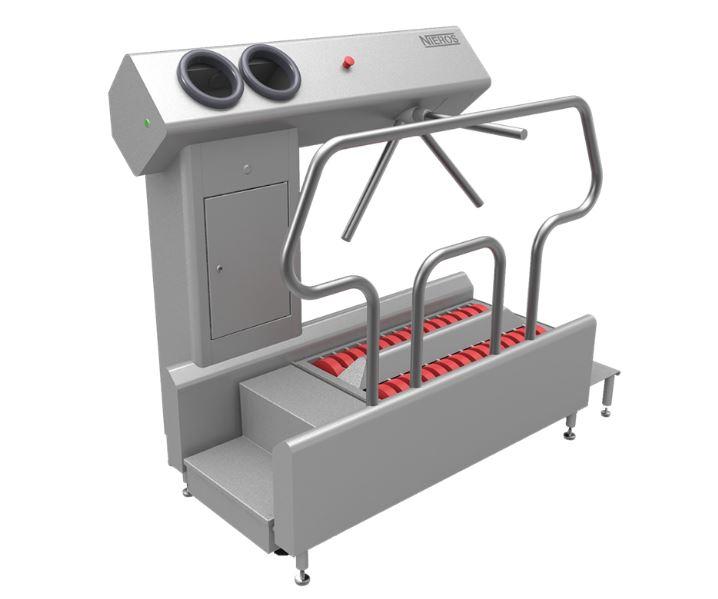
An automatic hand washing station with a modular design can be tailor-made to fit the specific requirements of a facility. Companies can choose from multiple washing capacities, installation methods, levels of automation, disinfection equipment, drying options, footwear cleaning options, and access-control features to match their environment.
Modularity can provide flexible positioning, efficient use of floor space, scalable capacity, integration of numerous functions, controlled entry, simpler maintenance, greater flexibility during expansion, and adaptation to changing regulations for hand hygiene compliance. Besides modularity, drainage is also an incredibly important part of the design. A hand washer and dryer requires drainage that removes water and waste efficiently without creating a new route for contamination.
Hand Hygiene Compliance Requirements Influence Hygiene Station Selection
Hand hygiene compliance substantially determines the choice of hygiene equipment. The unit must meet the facility’s sanitation protocols, address HACCP-identified risks, accommodate the number of staff using it, and enable personnel to complete the required cleaning and disinfection steps correctly. When choosing the right solution for a facility, regulatory requirements should come first, as they provide the basic framework.
HACCP is a key factor when selecting an automatic hand washing station. The system identifies biological, chemical, and physical hazards within a facility and establishes procedures for controlling them. The disinfecting solution therefore needs to reflect the actual contamination risks identified by the business. Hand-cleaning requirements define the station configuration, the number of personnel determines its capacity, and staff flow determines where the station is installed. The selected unit therefore needs to support the facility’s complete compliance framework.
The Advantages of a Modular Automatic Hand Washing Station
Hand hygiene compliance starts with a modular design that allows facilities to build sanitation protocols around their production requirements. Rather than treating hand and footwear disinfection as separate practices, facilities can configure washing, rinsing, drying, disinfection, and controlled access according to available space and personnel flow. A modular unit is built from individual components that can perform specific functions or work together as a larger system. This structure simplifies installation and allows the configuration to match the operational conditions of a facility.
One of the key advantages of a modular hand washer and dryer is its ability to fit different spaces. Industrial facilities rarely have identical layouts, and a fixed installation can create limitations when available floor space is restricted. Modular solutions are more flexible, offer additional features, and can be custom-made. Another advantage, besides making better use of limited floor space, is the flexibility to accommodate increased production volumes and stricter sanitation requirements.
NIEROS® Hygiene Station HC XXL Designed for Large Productions
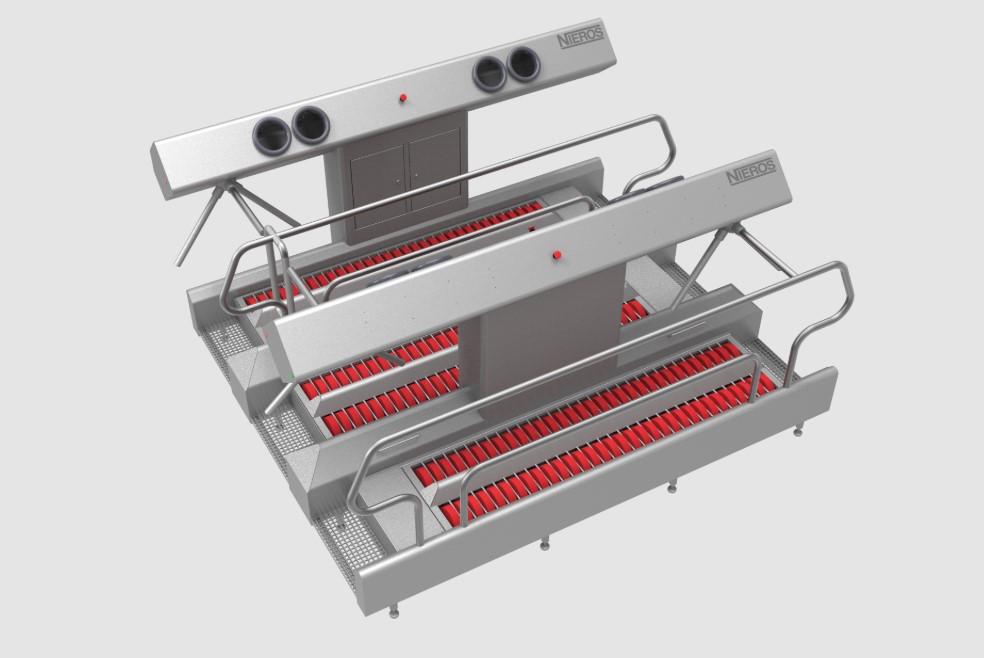
The automatic hand washing station is engineered for larger facilities with a considerable number of personnel. It has two automatic hand-washing and disinfection units, three walk-through footwear brush cleaners, three turnstile-controlled passages, and three vertical brushes for cleaning both sides of the boots. This height-adjustable solution also has three lanes, two for entering and one for exiting, a hygienic design, a sandblasted finish, and easy-to-change brushes.
The fully digitally operated hand washer and dryer has twice the operating capacity, allowing 20 to 30 people to pass through per minute. To maintain high disinfection standards, the machine can be connected to personal card readers and a centralized chemical supply.
Drainage Design Is Paramount in Industrial Hand Washing Areas
A hand washer and dryer can be state-of-the-art, but if the drainage is not properly engineered, the unit will not perform effectively. Drainage is one of the least visible components, yet it affects hygiene, cleaning efficiency, workplace safety, and contamination control. During washing and disinfection, water must leave the area quickly and predictably. If it remains around the sink, collects on the floor, or moves toward a sterile zone, the sanitation area can become a source of problems rather than a barrier against them.
Standing water can create an environment that supports microbial growth. Basins have a free-draining design that prevents water from stagnating and building up, thereby reducing associated risks. For the best results, NIEROS® integrates drainage into the design of an automatic hand washing station. Proper splash control also helps reduce the drainage burden by lowering the volume of wastewater reaching the floor and making the drainage system more effective.
NIEROS® Hand Washer and Dryer Reduce Dependence on Manual Hygiene Supervision
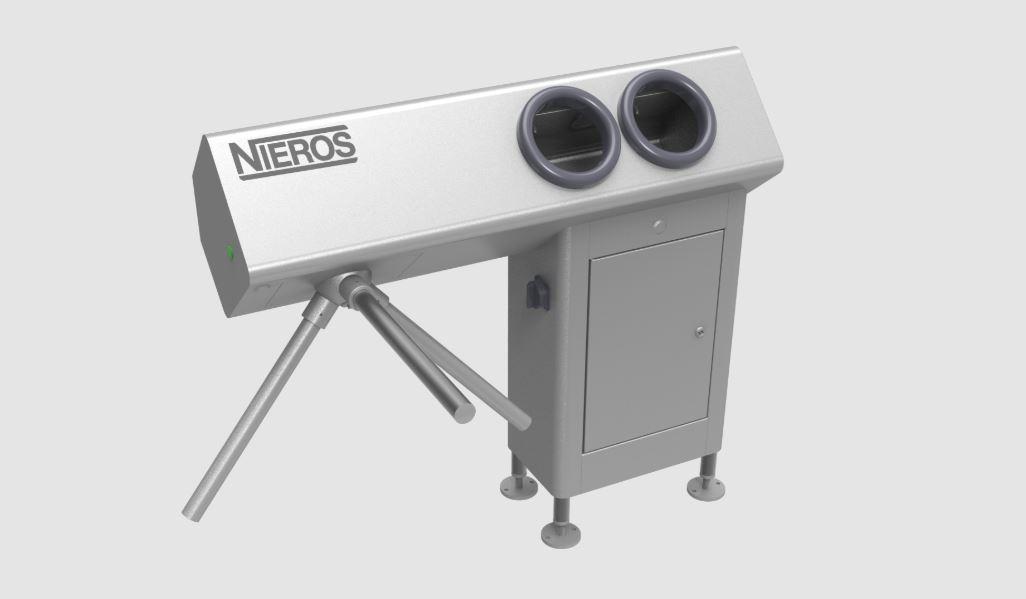
Hand hygiene compliance is often achieved through strict supervision, which can be a demanding task. Personnel need to follow a defined hand-cleaning process, use the correct amount of soap or sanitizer, and complete each stage in the correct order. Manual supervision can create a weakness in the system. NIEROS® addresses this challenge by shifting several elements of sanitation control from manual supervision to automated equipment. Automatic dosing, sensor-controlled operation, guided cleaning sequences, and turnstile-controlled access can make the hygiene procedure part of the workflow.
The NIEROS® automatic hand washing station guides staff through the required steps and helps prevent insufficient hand cleaning, while controlled access prevents entry until the cleaning process is complete. This creates a foundation for safe and efficient sanitation, enabling staff to follow established protocols without unnecessarily interrupting the workflow.