
 EN
EN



- Gmajna 55, Gmajna, 2380 Slovenj Gradec
- http://www.nieros.com/
- [email protected]
- +386 (0)2 88 27 100
Sanitizing Machine for Vacuum-Packed Products: The CLT SA
A sanitizing machine can help food-processing facilities introduce a more controlled approach to treating packaged products. Although vacuum packaging protects the product inside, the outer surfaces of packs may still require sanitation during production. The NIEROS® Pack CLT SA industrial sanitizer is designed for vacuum-packed products in buckets, bags, tins, or on trays. It provides a dedicated treatment stage that can be integrated into an existing production line or used as a separate unit.
Effective sanitization procedures depend on suitable equipment, an appropriate production layout, and clear operating practices. The CLT SA can process up to 300 items per hour, with maximum dimensions of 800 × 500 × 400 mm per item. Its adjustable configuration allows facilities to consider their specific installation and workflow requirements.
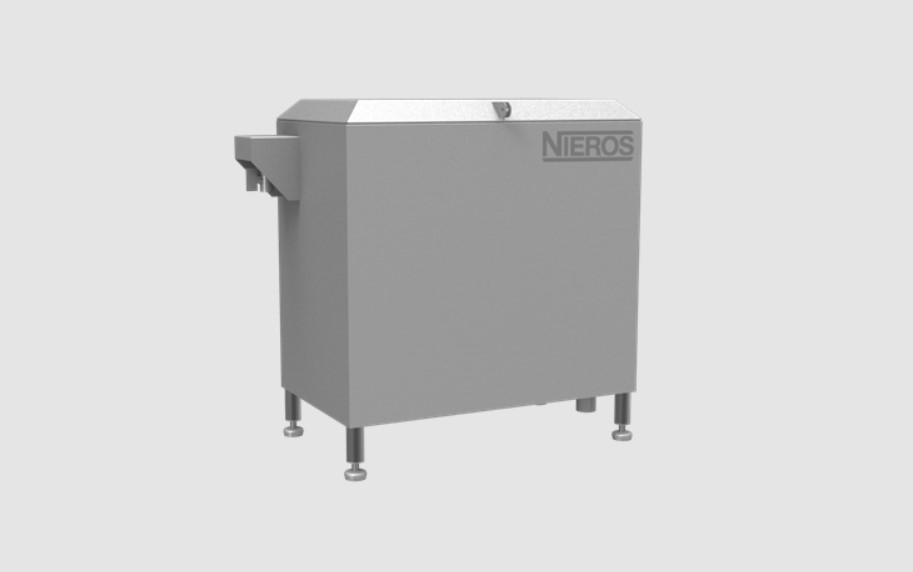
Why Sanitization Procedures Matter for Packaged Products
Sanitization procedures are an important consideration when vacuum-packed products move through industrial production areas. Packaging provides protection for the contents, but the external surfaces may still need treatment before further handling, storage, or transportation. Dedicated equipment can help facilities establish a more structured process for managing these products.
Buckets, bags, tins, and trays can differ in shape, size, and handling requirements. The CLT SA is designed for these different packaging formats and can be configured to suit the movement of products through the facility. Clear sanitization procedures also help operators understand when and how packaged products should be treated, making sanitation a defined part of production.
How the Industrial Sanitizer Supports Production Flow
The NIEROS® CLT SA functions as an industrial sanitizer for vacuum-packed products. It can be supplied as an integrated or separate unit, allowing manufacturers to determine how it should connect with other production stages. Its mesh conveyor belt supports product movement through the machine, while the height-adjustable design can accommodate different installation conditions.
The sanitizing machine CLT SA is designed for a throughput of up to 300 items per hour, although the actual capacity depends on product dimensions and characteristics. Its maximum item dimensions are 800 × 500 × 400 mm. The smooth surface finish supports practical cleaning and maintenance, while DIN 1.4301 stainless steel, also known as AISI 304, provides suitable construction material for demanding industrial environments.
The machine also offers IP65 protection, optional mobile wheels, and an optional vapor extraction fan. These features can be selected according to the conditions of the installation and the facility’s operational requirements. The available configuration options make it easier to adapt the equipment to different production layouts and working environments. This allows manufacturers to consider both the machine’s core function and the practical requirements of integrating it into their existing operations.
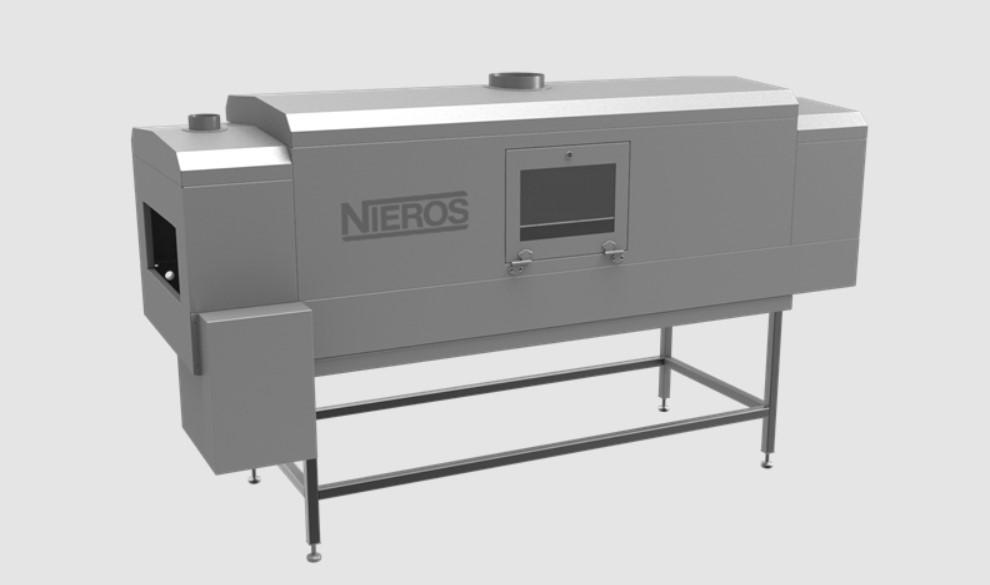
Features of the NIEROS® Sanitizing Machine
The sanitizing machine CLT SA includes features designed to support reliable operation in industrial settings. Its mesh conveyor belt allows vacuum-packed products to pass through the machine, while the adjustable height helps adapt the equipment to the surrounding production area. The machine can be installed as part of a wider system or used independently.
Optional mobile wheels may be useful where production layouts change or where the equipment needs to be moved for cleaning and maintenance. NIEROS® can also provide customized versions according to specific operational requirements. Before selecting a configuration, facilities should consider available floor space, product dimensions, electrical connections, and expected throughput.
The CLT SA is designed for an electrical connection of 3 × 400 V, 50 Hz. Evaluating these technical requirements in advance can help ensure that the equipment is incorporated into the production environment efficiently.

Water Recycling and Operational Features
Water consumption is an important consideration when developing sanitization procedures for industrial production. The CLT SA includes a water recycling system, which can help reduce freshwater consumption during operation. This feature supports a more efficient approach to treating vacuum-packed products.
The machine also offers several practical features for industrial use, including a smooth surface finish, height-adjustable construction, and IP65 protection of electrical parts. Optional mobile wheels can provide additional flexibility where equipment needs to be repositioned, while the optional vapor extraction fan can be selected according to the conditions of the installation.
Selecting an Industrial Sanitizer for Long-Term Use
Choosing an industrial sanitizer requires consideration of product types, packaging formats, dimensions, required throughput, available space, and installation method. Facilities should also determine whether the equipment should operate independently or as part of a larger system. These factors help identify the most suitable configuration for the intended workflow.
The right sanitizing machine should be selected according to product dimensions, required capacity, and available production space. The CLT SA offers flexibility through its integrated or separate installation options, adjustable height, optional mobile wheels, and customization possibilities. Its stainless-steel construction, smooth surfaces, filtration system, and protective functions support practical industrial use.
The CLT SA provides a dedicated solution for treating vacuum-packed products in different packaging formats. For companies looking for a purpose-built sanitizing machine, this NIEROS® solution combines configurable installation, conveyor-based handling, water recycling, and operational protection to support an organized sanitation stage within industrial production.